The Pump Handle: Why it Matters

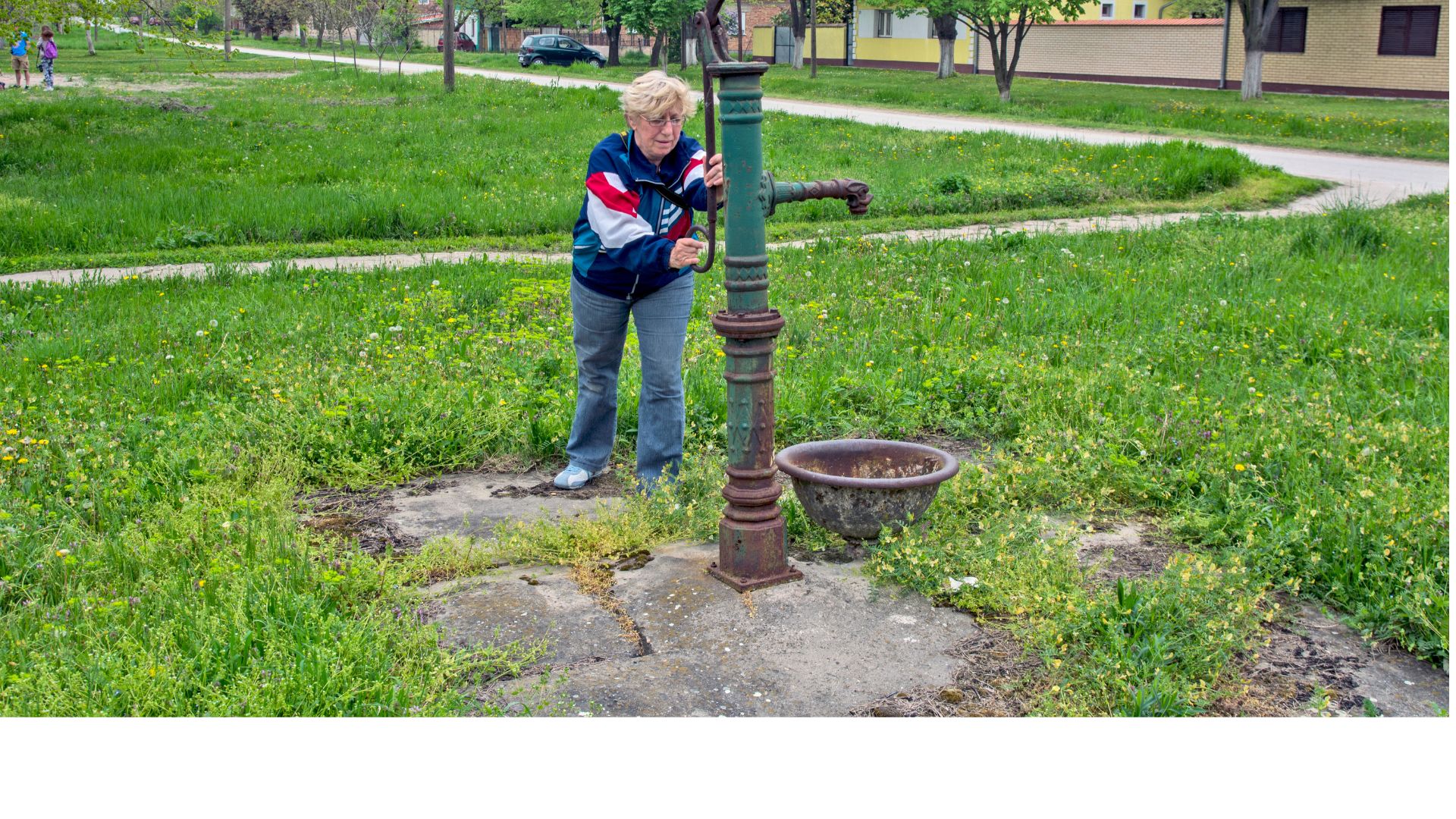
The Pump Handle: A Classic True Story that Launched the Public Health Profession
“This is Observation, Innovation, and Courage in Action.” … Dr. Rob
Have you ever noticed how every major breakthrough in public health begins not with technology, but with someone seeing what everyone else overlooked?
The Setting and the Belief
London, 1854. The city is bursting with life and sickness. Thousands of people crowd into narrow streets with little sanitation. The stench of sewage fills the air. When a terrible wave of cholera sweeps through the Soho district, panic follows.
Doctors and officials of the time believe in the miasma theory. This is the idea that “bad air” or foul smells cause disease. They light fires, spread perfume, and close windows, convinced that if you can’t smell the rot, you’re safe.
The Observer’s Question
But one young doctor, John Snow, isn’t convinced. He’s seen cholera up close and wonders, what if it isn’t the air at all? What if something people eat or drink is carrying the invisible poison?
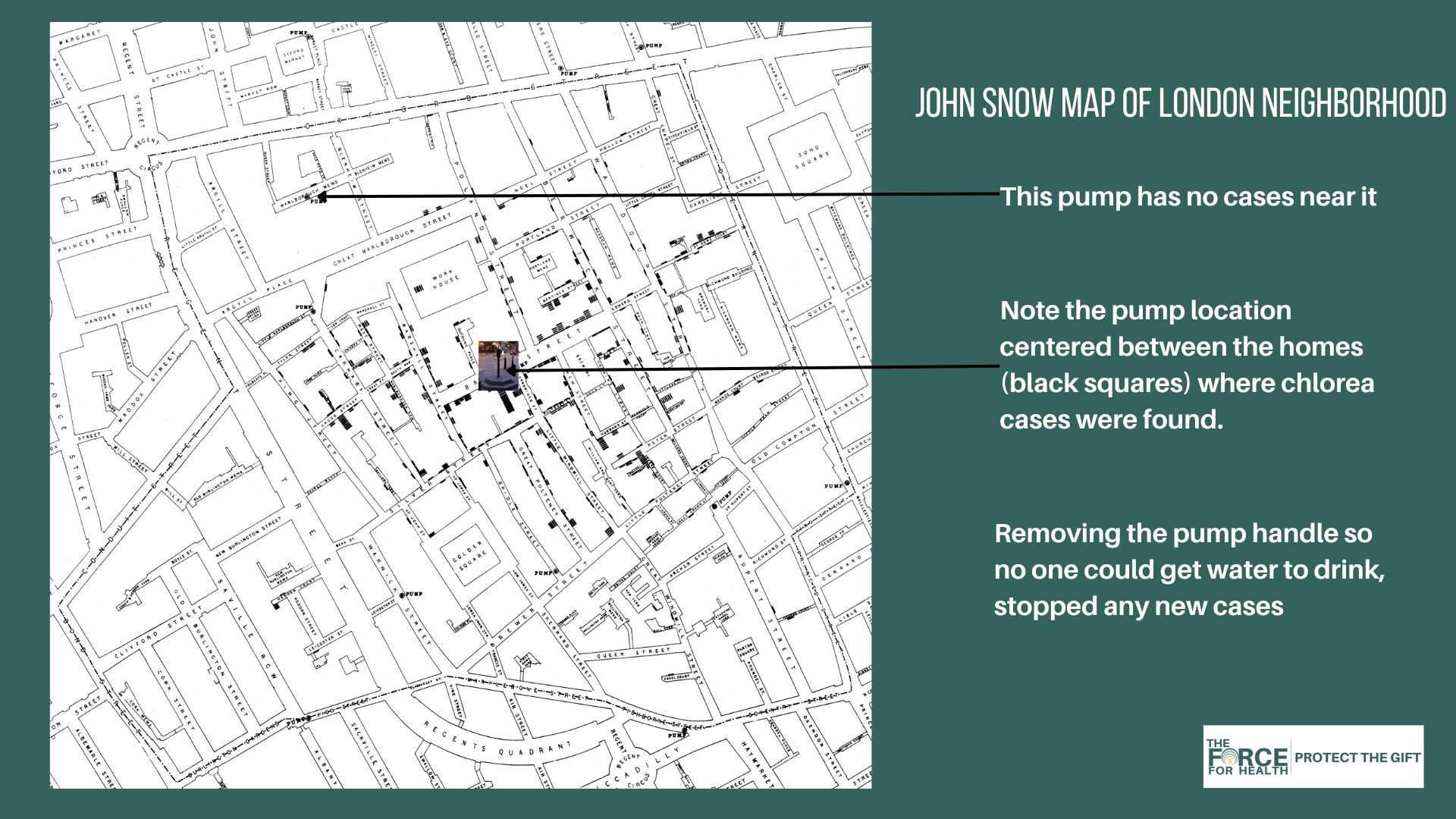
Armed with only a notebook, curiosity, and a city map, Snow begins to walk. He visits each home where someone has died and marks the location with a small black line. Day after day, the map fills. A pattern emerges and is noticed. It seems most of the deaths cluster around one water source: the Broad Street pump.
Action and Discovery
Snow digs deeper. He learns that local brewery workers, who drink only beer, remain healthy. Families who draw water from other wells are fine. But nearly everyone relying on the Broad Street pump has fallen ill.
He presents the map and his observations to city officials. Many laugh him off. After all, everyone knows diseases come from bad smells, not water. Still, the evidence on Snow’s map is undeniable: the closer you live to the pump, the higher your chance of death.
Authorities finally agree to a simple test. They remove the pump handle. Overnight, people must fetch water elsewhere. Within days, new cholera cases plummet.
Later, investigators discover a broken sewer pipe leaking directly into the well. Snow’s quiet persistence has changed history.
The Immediate Result
The Broad Street outbreak fades. The city learns that invisible organisms or microbes, yet to be fully understood, can travel through water. Snow’s work becomes one of the first modern examples of epidemiology, the study of how disease spreads and can be stopped.
So why does this matter today? Here’s Dr. Rob’s Perspective.
Dr. John Snow’s real discovery wasn’t just that water could carry disease. It was that careful observation and pattern‑finding can expose the truth even in chaos. His map turned tragedy into data and data into action.
The tools have changed; the principle has not. When we trace a virus, analyze neighborhoods for asthma triggers, or test a food supply chain, we’re using the same logic. Every public‑health dashboard, every outbreak map, every clean‑water initiative owes a debt to a doctor with a notebook who refused to accept “that’s just how it is.”
Snow’s courage teaches that science isn’t about fancy instruments; it’s about curiosity with follow‑through. It’s about challenging accepted stories until new evidence writes a better one.
The Challenge
What can you observe that can be improved with innovation and action in your world?
Look around you. What “pump handle” in your world could be removed?
Is it a habit that wastes resources, a practice that harms health, or a pattern that hurts your community? Map it. Question it. Test a change. Then share what you find.
That’s how observation becomes innovation—and how ordinary people save lives.