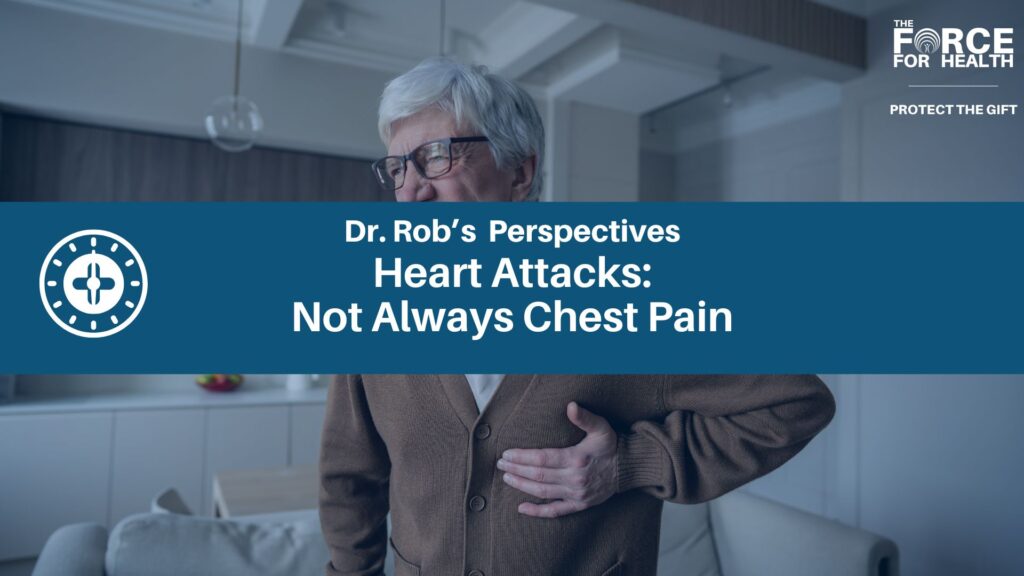
Heart Attacks: Not Always Chest Pain

Been there. Done that.
“For me it was occasional profound shortness of breath walking about 100 feet to the rural mailbox, with no other symptoms. Luckily I acted in time for a stent and I survived a potential widow makers blockage with no heart damage.” Dr.Rob
Medical Perspectives with Dr. Rob
Dr. Rob’s Video Transcript
A hundred thousand heartbeats a day. Yes, sixty to seventy beats a minute times one thousand four hundred forty minutes in a day. That is a lot of heartbeats. That is a muscle that is working all the time, every day of your life.
When it stops working properly, it is sometimes called a heart attack, when part of the heart is dying because blood is not getting to it. Those symptoms are heart attack symptoms.
Most people think of a heart attack the way they see it in the movies. Crushing chest pain, someone grabbing their chest, collapsing, and suddenly dying. That can happen.
I am Dr. Rob with the Force for Health, Dr. Rob Gilio, but that is not how it happens all the time.
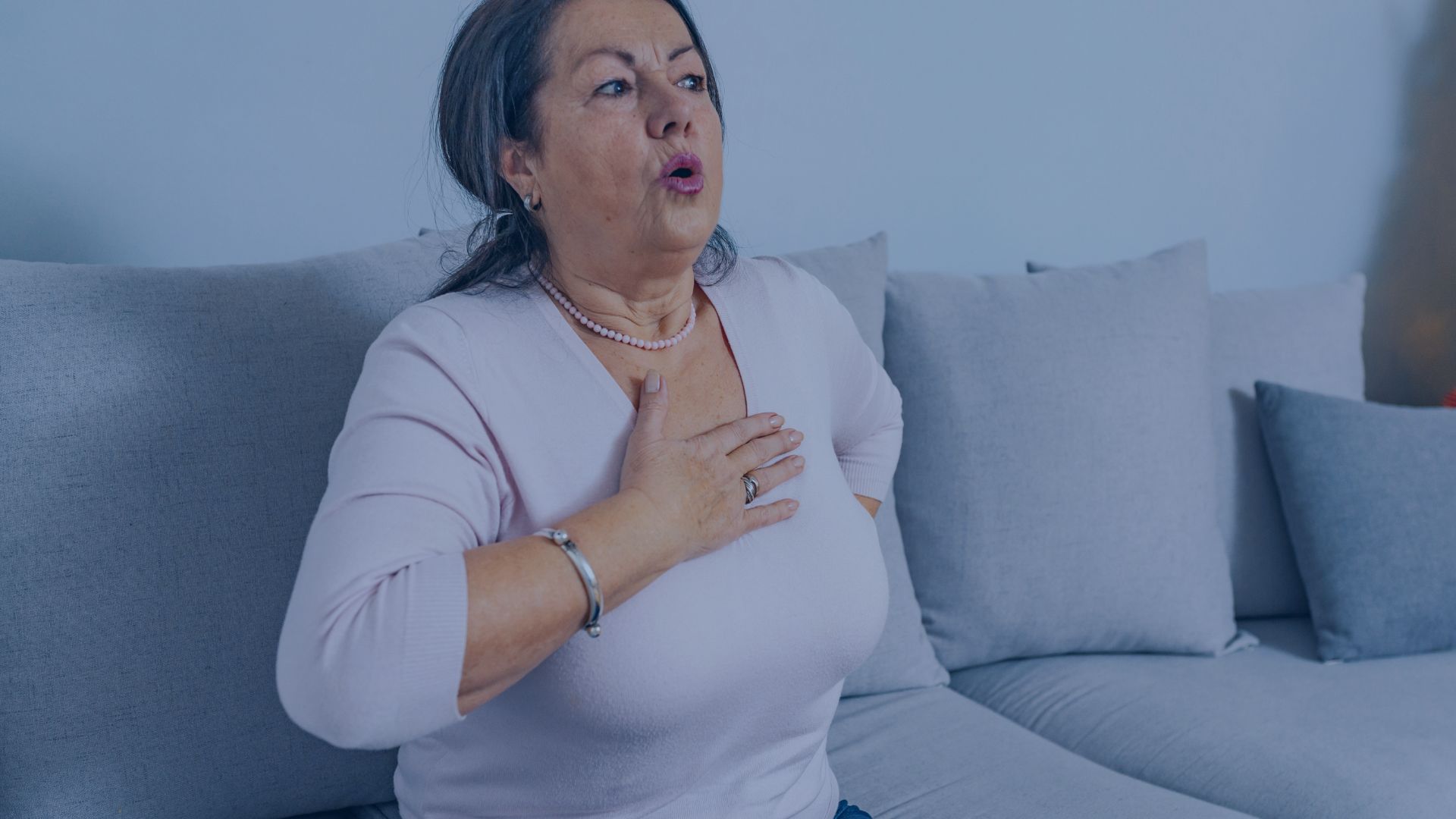
As a physician and as a patient, I have noticed that sometimes it is much quieter. A person may feel shortness of breath out of proportion to the exercise they are doing. Unusual fatigue, lightheadedness, or wooziness. Nausea, sweating, pressure, tightness, discomfort like an elephant sitting on the chest, but not necessarily pain.
Some people, especially women, older adults, and people with diabetes, have no chest pain at all. I remember someone describing it as just feeling off. Another person said it felt like they could not catch their breath walking across the room. My own family member described a strange feeling she called woozy. No pain. Something different. But it turned out to be a heart attack.
The heart muscle is not getting enough oxygen, and the body sometimes whispers before it screams with horrible pain.
If you experience new shortness of breath, especially out of proportion to what you are doing, sudden weakness, chest pressure, discomfort in your jaw, neck, back, or arm—more often on the left than the right—or just a sense that something is not right, especially if it is accompanied by dizziness, your heart racing, or lots of palpitations, do not ignore it.
If it is significant, call 911. It is better than driving yourself to the hospital, especially if you are having a problem. It is always better to be told it is nothing than to stay home during something serious.
Your heart does not always shout. Sometimes it whispers. Listen to it. Protect the gift, the gift of that heartbeat. Let the beat go on, and be aware when the beat needs your help.
Another Medical Minute with Dr. Rob. In the blog below, I have listed a more detailed summary of the things we just talked about.
Thanks for listening, and thanks for being a force for health.
Heart Attacks: Not Always Dramatic, Often Subtle
When we picture a heart attack, Hollywood has trained us to expect dramatic chest clutching and sudden collapse.
Real life is often very different.
Heart attacks — medically known as myocardial infarctions — occur when blood flow to part of the heart muscle becomes blocked. Without oxygen, that muscle begins to suffer injury.
But the symptoms don’t always look the same.
The “Classic” Symptoms
Many people do experience:
- Chest pressure, heaviness, or squeezing
- Pain that may spread to the left arm, jaw, or back
- Shortness of breath
- Sweating
- Nausea
The key word here is pressure. It’s often not sharp pain — it’s tightness or heaviness.

The Less Typical — But Common — Symptoms
Some heart attacks are quieter.
Especially in:
- Women
- Older adults
- People with diabetes
- Individuals with prior heart disease
Symptoms may include:
- Shortness of breath without chest pain
- Unusual fatigue
- Lightheadedness or wooziness
- Sudden weakness
- Indigestion-like discomfort
- Back or jaw discomfort
- A vague sense of “something isn’t right”
One person may say, “I just felt off.”
Another might say, “I couldn’t walk across the room without getting winded.”
Another may feel dizzy — but no chest pain at all.
These are not rare exceptions. They are common variations.
Why Symptoms Vary
The heart muscle does not have one single pain signal.
When oxygen supply drops:
- Nerves send signals differently depending on location.
- Some people experience pressure.
- Others experience breathlessness.
- Some feel nausea due to shared nerve pathways.
Diabetes can blunt pain sensation. Aging can change how signals are perceived. Women often present differently than men.
That’s why awareness matters.
The “Gut Feeling” Factor
As physicians, we often hear patients say:
“I just knew something wasn’t right.”
That instinct matters.
If you experience:
- New shortness of breath
- Unexplained sweating
- Sudden dizziness
- Chest pressure or discomfort
- Jaw, neck, back, or arm discomfort
- Or an overwhelming sense of unease
It could be a heart attack.
And time matters.
Why Acting Quickly Saves Heart Muscle
Every minute of blocked blood flow means more heart muscle at risk.
Early treatment can:
- Restore circulation
- Limit damage
- Preserve heart function
- Save a life
Calling 911 is safer than driving yourself. Emergency responders can begin treatment immediately.
A Simple Rule
If symptoms are:
- New
- Unusual
- Unexplained
- Or concerning
Get checked out.
It is always better to be evaluated and reassured than to stay home during a preventable emergency.
Your heart doesn’t always shout.
Sometimes it whispers.
Listen to it.
Protect the gift…let the beat go on.